Courses, guides, and learning materials I've collected or completed — shared freely for anyone starting their DevOps journey.
This course was taught to us by three exceptional instructors at HIST Jamshoro — Sir Laique, Sir Zubair and Sir Mansoor. Their patience, clarity, and passion for teaching made Linux genuinely understandable for absolute beginners like me at the time.
The foundation they gave me carried me from an intern to a Lead DevOps Engineer. I'm sharing this course publicly as a small tribute to their effort — so their teaching continues to help others long after those classroom sessions.
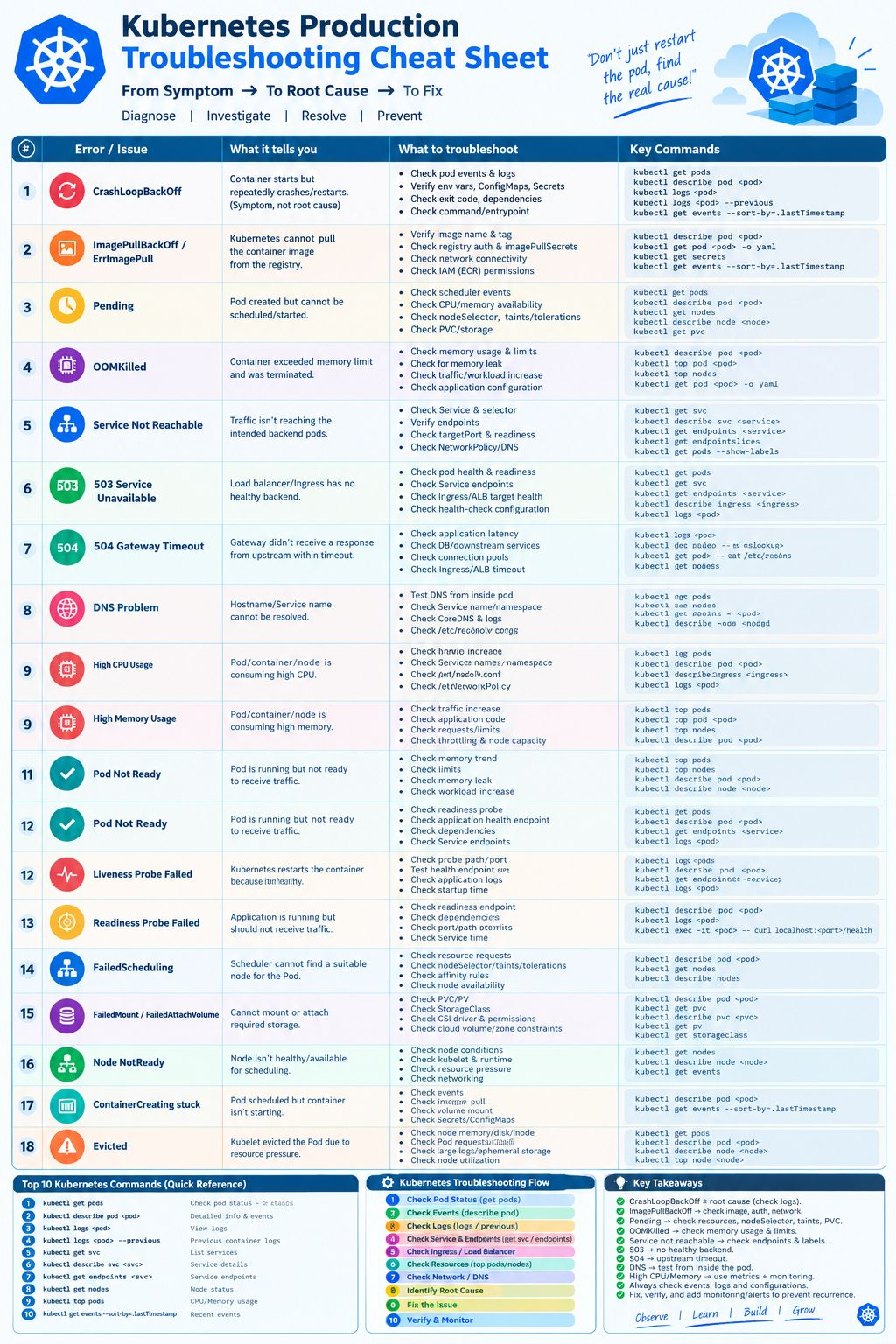
kubectl commands, JSONPath query expressions, ephemeral container debugging workflows, and etcd disaster recovery procedures used across production enterprise clusters.
tcpdump packet analysis, strace syscall profiling, ss socket inspection, lsof file descriptor leaks, and systemd-analyze boot optimization.
Consistently operating resilient cloud systems requires standardizing operational procedures across the entire software delivery lifecycle. Whether designing distributed Kubernetes deployments or tuning AWS network load balancers, apply these three core engineering tenets:
Never mutate running production servers via ad-hoc SSH. All infrastructure changes must originate from version-controlled Terraform code or GitOps repositories with cryptographic commit signing.
Instrument systems around the Four Golden Signals: Latency, Traffic, Errors, and Saturation. Define concrete Service Level Objectives (SLOs) and error budgets rather than relying on noisy threshold alerts.
Assume any node, availability zone, or network connection will fail. Deploy across minimum 3 availability zones, configure PodDisruptionBudgets, and verify automated horizontal pod autoscaling under load.
When troubleshooting high-latency or 5xx connection timeouts in production, run these diagnostic commands in sequence to isolate whether the root cause is kernel exhaustion, network drops, or application deadlocks:
Yes. All downloadable course packages, cheat sheets, command references, and architectural templates on naveedkumbhar.com are 100% free with no account creation or email paywall.
The package contains 41 comprehensive lectures across 5 modules covering Linux filesystem hierarchy, user permissions, networking and subnetting, SSH remote access, web servers, MySQL databases, iptables, regex/AWK/sed, and Bash shell scripting.
The recommended practice path is setting up a local Minikube or Kind cluster for hands-on Kubernetes drills and utilizing AWS Free Tier or localstack for cloud infrastructure automation drills.
Visit interview.naveedkumbhar.com for over 950+ production incident scenarios across Kubernetes, AWS, Terraform, Docker, and Linux with full CLI diagnostic runbooks.